
Indian benchmark indices, Sensex and Nifty, closed nearly flat on Thursday, influenced by the US Federal Reserve's interest rate hike and indications of further monetary tightening. Despite some intraday gains, caution prevailed, with foreign institutional investors continuing to offload equities. Meanwhile, the National Stock Exchange of India's (NSE) mega initial public offering opened for subscription, garnering 39 per cent subscription on its first day.

Prudential plc has announced its acquisition of a 75 per cent stake in Bharti Life Insurance for approximately 3,500 crore, a strategic move to secure majority ownership in the Indian life insurance market. This acquisition necessitates Prudential reducing its holding in ICICI Prudential Life Insurance to below 10 per cent.

Indian benchmark indices, Sensex and Nifty, experienced a sharp decline at the close of trade, with the Sensex dropping 539 points and the Nifty falling below 24,100, primarily due to selling pressure in HDFC Bank and ongoing geopolitical uncertainties.

The combined market valuation of four of India's top-10 most valued firms eroded by Rs 87,960.29 crore last week, with Bharti Airtel experiencing the largest decline, amidst a bearish trend in the equities market.
Indian stock markets closed lower due to selling in IT and FMCG shares, triggered by renewed tensions in West Asia which led to a rally in crude oil prices and concerns over inflation and interest rates.

Indian benchmark equity indices extended their losing streak for a fourth consecutive day, with the Sensex tumbling 417 points due to rising crude oil prices and a significant sell-off in IT stocks, impacting overall investor sentiment.
Indian benchmark equity indices, Sensex and Nifty, experienced declines in early trade due to renewed tensions in West Asia, which led to a rebound in crude oil prices, coupled with weak global market trends and foreign fund outflows.

Indian benchmark equity indices, Sensex and Nifty, closed mixed on Friday. While a drop in crude oil prices offered some relief, weakness in IT stocks and several Tata Group counters, including a significant dip in Tata Chemicals and ongoing boardroom issues at Tata Sons, limited a broader market recovery.

Indian benchmark indices Sensex and Nifty experienced declines in early trade, driven by a surge in Brent crude oil prices above USD 91 per barrel due to escalating tensions between Iran and the US, alongside an increase in US 10-year bond yields. Track Sensex, Nifty on August 18.

Indian benchmark indices Sensex and Nifty opened higher, driven by a significant drop in crude oil prices and a positive trend in global equities, with foreign fund inflows further bolstering domestic markets.

The combined market valuation of five of India's top-10 most valued firms eroded by Rs 1 lakh crore last week, with IT giant Tata Consultancy Services (TCS) experiencing the largest decline amidst a bearish trend in domestic equities.

Indian equity benchmark indices, Sensex and Nifty, ended marginally lower in a volatile trading session, surrendering early gains due to profit-taking in blue-chip stocks and persistent macroeconomic concerns, despite positive global cues.
Indian benchmark indices, Sensex and Nifty, experienced significant declines, with the Sensex falling 493 points and the Nifty dropping for the sixth consecutive day, primarily due to elevated crude oil prices reaching USD 91 per barrel and diminishing hopes for a diplomatic resolution in West Asia.

Indian benchmark stock indices, Sensex and Nifty, advanced for the second consecutive day, driven by softening crude oil prices and a positive trend in global markets. Despite some profit-taking in IT and metal shares, auto stocks outperformed, contributing to the overall gains.

Indian benchmark indices, Sensex and Nifty, experienced declines in early trade, primarily due to a surge in crude oil prices and a retreat in Wall Street, as investors reduced exposure to risk assets amidst geopolitical uncertainty. Track Sensex, Nifty on August 7, 2026.

Indian benchmark indices, Sensex and Nifty, saw a significant rebound in early trade, with the Sensex jumping 726 points and the Nifty climbing over 200 points, primarily driven by strong performances in IT stocks, HDFC Bank, and renewed foreign fund inflows. Track Sensex, Nifty on July 29.

Indian benchmark indices Sensex and Nifty closed lower, with the Nifty recording its fourth consecutive day of decline, primarily due to elevated oil prices and ongoing geopolitical tensions between the US and Iran, which dampened investor sentiment.

Gold futures saw a significant rise for the second consecutive day, driven by strong overseas market rallies, increased safe-haven demand due to geopolitical uncertainties, and a weaker US dollar. This surge coincided with the Reserve Bank of India's decision to maintain its repo rate, reflecting a focus on growth amidst global inflation concerns and easing oil prices.
Indian benchmark indices Sensex and Nifty recorded sharp gains, rising over 1 per cent, driven by strong performances in IT stocks, HDFC Bank, and renewed foreign fund inflows, despite mixed global cues and elevated crude oil prices.

Analysts predict that the Reserve Bank of India's interest rate decision, the evolving situation in West Asia involving the US-Iran conflict, and crude oil prices will be the primary factors influencing investor sentiment in the Indian stock market this week.
Indian benchmark indices Sensex and Nifty experienced a significant slump, with the Sensex tumbling 719.08 points, driven by escalating West Asian tensions, a sharp rise in crude oil prices, and a global sell-off in technology stocks.
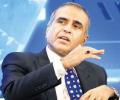
Sunil Bharti Mittal, 68, will retire as chairman of Airtel Africa in July after the conclusion of this year's annual general meeting (AGM), the board of the African arm of India's second-largest telecom service provider Bharti Airtel said in a statement to the exchanges on Wednesday.
Indian benchmark equity indices, Sensex and Nifty, extended their decline for a second consecutive day, primarily due to elevated crude oil prices and selling pressure on Tata Group stocks following Tata Sons Chairman N Chandrasekaran's announcement that he will not seek reappointment.
Indian benchmark equity indices, Sensex and Nifty, experienced declines in early trade due to a surge in Brent crude oil prices, which rose above USD 90 per barrel, coupled with subdued global cues and ongoing US-Iran skirmishes. Track Sensex, Nifty on Auigust 12.

Despite recent share price dips, Bharti Airtel is strategically positioned for growth, driven by investments in data centres via Nxtra, a potential tariff hike, and strong performance in Africa, alongside efforts to deleverage and expand its subscriber base in underpenetrated rural markets.
Indian benchmark indices Sensex and Nifty saw declines in early trade, influenced by elevated crude oil prices stemming from renewed geopolitical uncertainties, particularly concerns surrounding the Strait of Hormuz. Track Sensex, Nifty on August 11, 2026.
Indian benchmark indices, Sensex and Nifty, experienced declines in early trade due to a significant spike in crude oil prices, driven by escalating geopolitical uncertainties, despite positive cues from Asian and US markets.

Maruti Suzuki India (MSIL) reported a 9.1 per cent year-on-year decline in net profit for the April-June quarter of 2026-27, marking its second consecutive quarterly fall. This dip occurred despite a significant 29.3 per cent jump in sales volume, primarily due to escalating commodity prices, increased energy costs, and logistics disruptions stemming from the West Asia conflict.

Bharti Airtel reported a 33.5 per cent decline in consolidated net profit to Rs 7,325 crore for the March 2026 quarter, primarily attributed to one-time provisions for statutory and tax liabilities.

Indian benchmark stock indices, Sensex and Nifty, extended their winning streak to a fourth day, with Nifty surging 1.60 per cent, driven by a sharp decline in crude oil prices and renewed foreign fund inflows.

In the next 36 months nearly 25 to 40 per cent of jobs will be under threat from AI and job losses are inevitable.

Bharti Airtel is strategically shifting its focus towards data centres, cloud services, and financial services as key drivers for its next phase of growth, leveraging significant past investments in digital infrastructure, as outlined by Chairman Sunil Mittal in the company's Annual Report for 2025-26.
Indian benchmark indices Sensex and Nifty saw a significant rebound in early trade, driven by a sharp decline in crude oil prices and easing geopolitical tensions in the West Asia, which improved market sentiment and reduced inflation fears. Track Sensex, Nifty on July 27.
Indian benchmark indices, Sensex and Nifty, closed lower due to significant selling in HDFC Bank and Axis Bank shares, driven by margin-related concerns and escalating US-Iran tensions, which also pushed crude oil prices higher.
Indian benchmark indices Sensex and Nifty rebounded in early trade on Thursday, recovering from a sharp fall in the previous session, driven by foreign fund inflows and buying in key blue-chip stocks. Track Sensex, Nifty on July 9, 2026.

Indian listed companies experienced their fastest revenue growth in 15 quarters during Q1FY27, with combined net sales rising 18.4% year-on-year, while net profit grew 16%, primarily driven by mining, metals, and banking sectors, despite a contraction in operating margins due to higher input costs.

'1991 was an exceptional period in Indian history.' 'A big 400-volt shock was administered to the system, which was required. Today, we are in a much, much better position.'
Indian benchmark indices, Sensex and Nifty, recorded their fifth consecutive day of losses, driven by investor caution over rising oil prices due to West Asia tensions and renewed concerns regarding US trade tariffs.

Indian benchmark indices Sensex and Nifty rallied in early trade, primarily driven by strong buying in IT stocks after Tech Mahindra reported a significant 28.4 per cent rise in its consolidated net profit for the June quarter.
Indian benchmark indices, Sensex and Nifty, experienced a significant downturn as escalating tensions in West Asia led to a sharp surge in crude oil prices, coupled with fresh foreign fund outflows and a weakening rupee.
